
A Polish-Sudanese expedition in Old Dongola, in northern Sudan, has for the first time reached the original floor of the Great Church of Jesus, the largest and richest church of medieval Nubia. The excavations were carried out on the bank of the Nile.[1][2][3]
The work took place last winter: a joint expedition of the Polish Centre of Mediterranean Archaeology of the University of Warsaw and the National Corporation for Antiquities and Museums of Sudan uncovered a monumental staircase leading inside, massive buttresses of the apse and part of the original floor. The mission is led by Professor Artur Obłuski.[3][4]
Besides the floor and the base of the huge staircase, the archaeologists found buttresses that reinforced the apse. The walls along the staircase survive to a height of about 11 metres, so the team has to dig deeper than usual, with methods and funding beyond those of a standard excavation. So far only a small part of the church has been uncovered.[2][5]
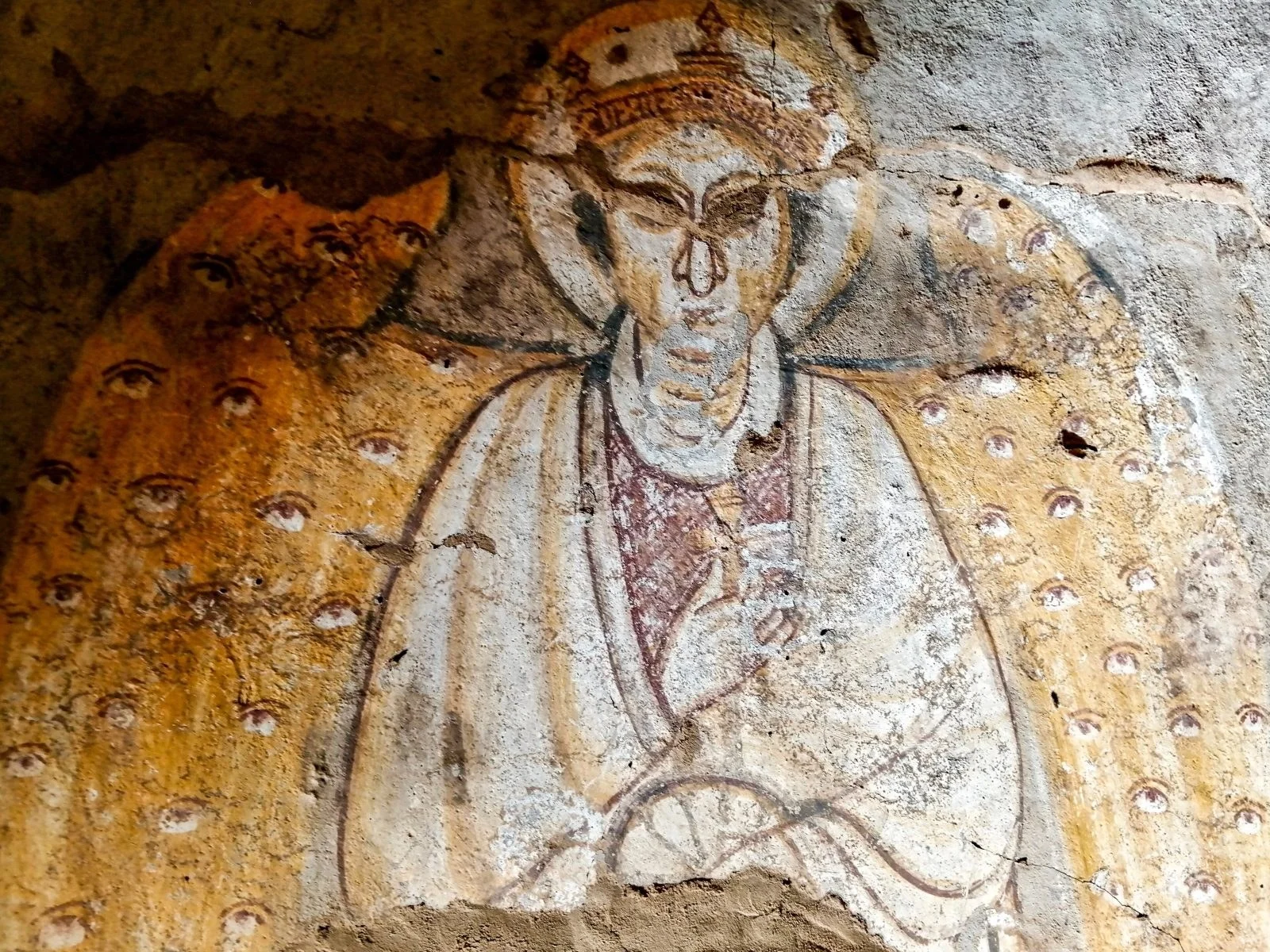
In an annex beside the main church, the team found another church, built on the ground floor. Its walls survive to only about a metre, but the interior was painted. The expedition is now storing six large racks of fragments of painted plaster. According to Obłuski, the paintings were magnificent.[2][4]
By current estimates, the building was about 47 metres wide and 57 long (154 by 187 feet). Its height is cautiously put at about 21 metres, taller than a six-storey building. Obłuski said the church was bigger than the White House in Washington, and added that the team plans to excavate it in full.[2][3][4]
Old Dongola was the capital of Makuria, a Nubian kingdom that adopted Christianity in the 6th century. The church is believed to date to at least the 13th century, but may be older.[3][5]
Obłuski compared it with Hagia Sophia in Constantinople: in his words, the Great Church of Jesus is a natural candidate for a model in the architecture of Nubia, and possibly of this whole part of Africa. He also believes the role of another church, standing outside Dongola's city walls, will have to be reconsidered: it was thought to be the cathedral, and now it is unclear what function it served.[3]
Polish researchers have worked in Nubia since Kazimierz Michałowski's discovery of the cathedral at Faras, when more than 120 medieval wall paintings were saved. Interest in the subject has risen again after the opening of the renovated gallery of Nubian antiquities at the National Museum in Warsaw.
Comments
To leave a comment, sign in with Telegram
Scan QR or open Telegram:
Open in TelegramWaiting for confirmation…