
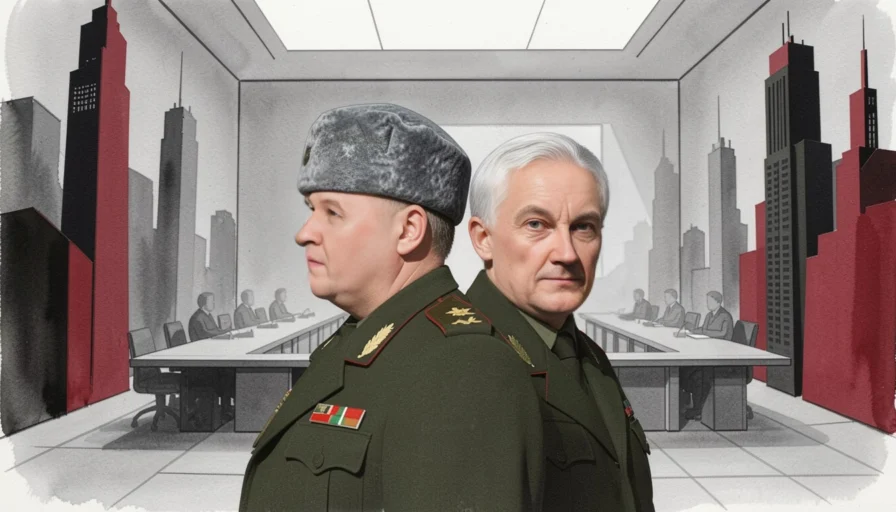
A meeting of the joint board of the defence ministries of Belarus and Russia is under way in Minsk. The meeting is chaired by Belarusian Defence Minister Lieutenant General Viktar Khrenin.
According to him, Belarus and Russia are strategic allies and partners, bound not only by treaty obligations but also by shared values, a shared history and shared responsibility for security across the Union State. The past period, the minister said, was a time of intensive and substantive work for the defence ministries.
According to Khrenin, the 2026 plan for bilateral military cooperation includes more than 160 joint events. Most of them, he says, involve practical drilling of tasks: exercises, training, assemblies and exchanges of experience. It is not yet known at which training grounds and sites these events will take place.
The minister also said the sides have moved to practical implementation of the Programme of Strategic Partnership in the Military Sphere for 2026–2030. According to him, the programme was approved at the previous board meeting in Moscow.
Khrenin said that all troop training is now built with the modern nature of armed conflict in mind. Experience gained in real combat conditions, including unmanned systems, electronic warfare equipment, robotic systems and new tactical methods, is, in his words, being immediately introduced into the Belarusian army's training system.
Russian colleagues, the minister asserts, share their advanced know-how, and this is one of the most valuable aspects of the alliance between the two countries.
Military-technical cooperation, Khrenin said, receives no less attention. According to him, mutual deliveries of military products continue and cooperation between the defence industries is deepening. In addition, he said, the combat capabilities of the Regional Grouping of Forces and the Unified Regional Air Defence System are growing.
The minister also spoke of the development of nuclear deterrence on the territory of the Union State. According to him, it serves the interests of strategic parity and of deterring a potential aggressor.
Khrenin described the situation around the two states as complex and dynamic. He claims that active combat training and reconnaissance activity is under way near the borders, that NATO's military presence on its eastern flank is being built up, and that attempts at destabilisation and provocation continue in the information space.
Joint work, therefore, in the minister's words, is "not a formality but a practical necessity." He believes it is precisely the unity of Belarus and Russia that makes it possible to keep the situation in the region stably under control.
The previous board meeting took place in Moscow in October 2025: the heads of the ministries then summed up the year's joint activity and set priorities for further cooperation. In October 2023, following a meeting in Moscow on 18 October, a cooperation plan between the Russian and Belarusian defence ministries for 2024 was signed.
Comments
To leave a comment, sign in with Telegram
Scan QR or open Telegram:
Open in TelegramWaiting for confirmation…