
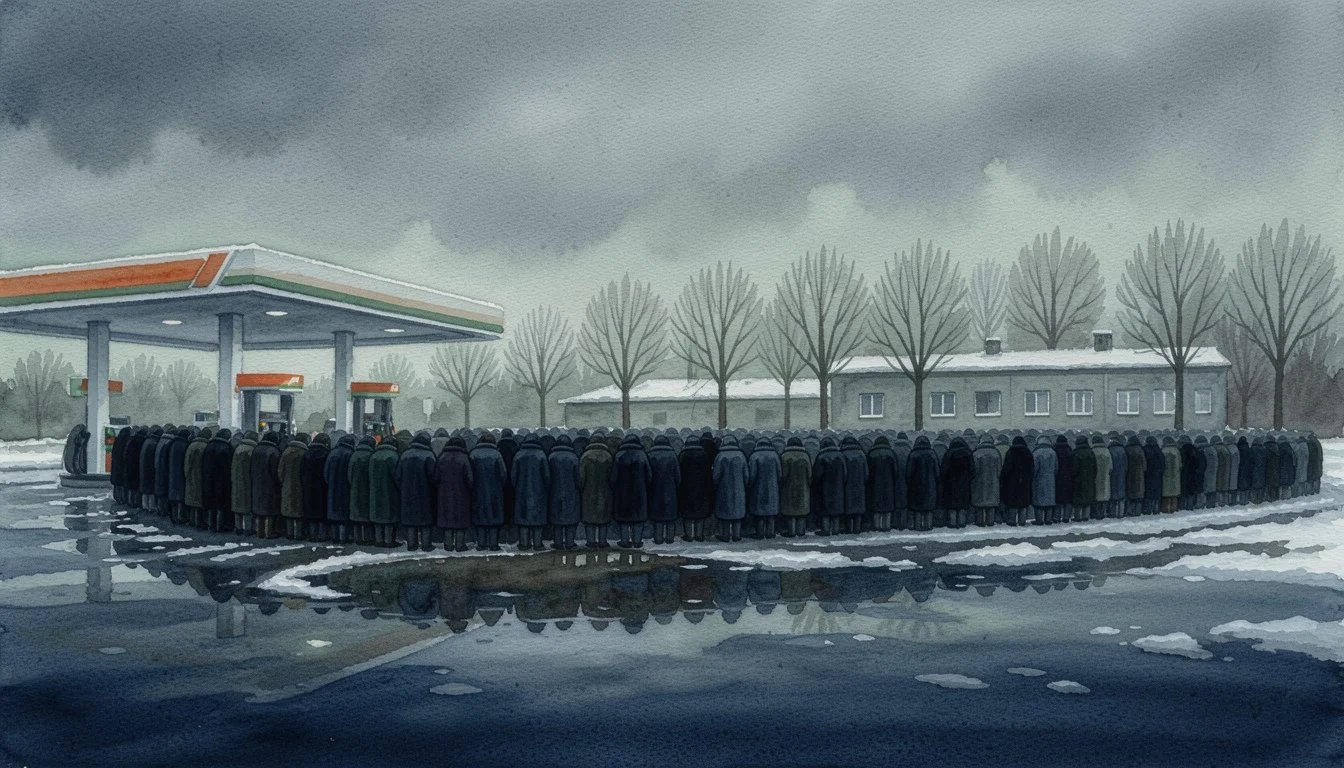
"Роснефть" has introduced limits on fuel sales at its filling stations in all regions of Russia. They are currently 30 litres in cities and 50 litres on highways, and filling jerrycans at the stations is not allowed. The introduction of the restrictions was reported by the administration of Zabaykalsky Krai.
The company lifted all limits on 23 October, so they returned in less than three weeks. The restrictions of recent months have come in waves, and this is not the first.
Scale of the restrictions across the country
In June 2026 the restrictions became nationwide: strict limits were introduced by chains that control about 25% of all filling stations in the country. At least 7000 stations out of nearly 29000 were affected. Tatneft (more than 850 stations) limited sales to passenger cars to 30 litres of petrol and 60 litres of diesel per tank. Rosneft (2200 stations), Bashneft (500 stations) and TNK banned selling any fuel into jerrycans. Lukoil and Teboil limited filling to 100 litres per receipt.
In June the Federal Antimonopoly Service (FAS) began blocking the resale of petrol and diesel on marketplaces. According to it, some people were buying up petrol in bulk specifically for resale. Avito temporarily hid all fuel sale listings, while Ozon and Wildberries removed such posts during moderation. A week earlier there had been 740 such listings on Avito, more than 400 of them from private individuals. From 15 to 19 June, AI-95 in Moscow rose in price by 1.76 roubles.
In August the restrictions returned. Since the start of the month they had been introduced again in at least five regions, and petrol shortages were recorded in more than 20 regions. On 13 August limits reappeared in the Astrakhan and Irkutsk regions: in Astrakhan, 40 litres per car and a shortened operating schedule for stations; in the Irkutsk region the KraisNeft chain limited sales of AI-92, AI-95 and AI-98 to 30 litres. In the Orenburg region, where drones had attacked a refinery shortly before, the limit was 30 litres per person. Gazprom Neft announced temporary limits of 40 litres per fill-up, while Tatneft's limits were 50 litres of petrol and 60 litres of diesel. According to the GdeBENZ service, as of 16 August petrol or diesel could be bought at only 28.1% of the country's filling stations.
Regional limits and enforcement
The current wave is uneven. The Ministry of Economic Development of Zabaykalsky Krai reported limits of 30 litres in cities and 50 on highways. The same limits have been introduced at Rosneft stations in Buryatia, Krasnoyarsk and Novosibirsk. In Karelia the authorities reported limits on petrol and diesel and a ban on dispensing fuel into jerrycans. In Tomsk, according to local authorities, a limit of 30 litres of petrol and 50 litres of diesel per person is in force. In Penza from 19 November petrol is limited to 50 litres and diesel to 200 litres per vehicle.
The strictest measures are in the Nizhny Novgorod region: 40 litres of petrol per car, a ban on sales into jerrycans, and restrictions for vehicles registered in other regions at stations near the region's borders. The National Guard and volunteers have been brought in to staff duty at filling stations there. In some regions, National Guard and police officers also monitor compliance with the limits.
From the history of export bans
Problems with the domestic fuel market did not begin in 2026. Russia banned fuel exports from September 2023, and from 1 March 2024 it banned petrol exports. In August 2025 the government extended the ban on selling petrol abroad until 30 September 2025, and in September a ban on exports of petrol and diesel until 31 December 2025 was reported. Nevertheless, in summer 2026 the country, normally a major fuel exporter, had to buy fuel abroad, including in India. Analysts say that petrol imports have ceased to be a temporary solution and have become a tool for covering long-term demand.
Why the shortage is returning
The main cause that the reports point to is Ukrainian strikes on refineries. A new wave of the crisis began in early August, when a number of regions introduced restrictions on fuel sales. Since late October, drones have repeatedly hit large plants and forced them to cut or halt some units. According to Reuters' industry sources, total oil refining volumes at Russian refineries have fallen by 45% since late October.
On the night of 9 November, drones attacked Kirishinefteorgsintez in the Leningrad region, Russia's second most powerful refinery, which is under international sanctions. The Moscow Times reports that the limits returned even though they had been lifted in 15 regions shortly before because of improved supplies.
The restrictions also affect Crimea. Belarusian media reported that since early November demand for petrol for generators has grown there and the shortage at filling stations has worsened. On 19 November the head of Sevastopol, Mikhail Razvazhayeu, announced a limit: a full tank plus 20 litres in a jerrycan.
Forecasts for the Russian market remain alarming. According to an estimate by RAND analysts, cited by Krutikhin, in a week Russia could face a motor fuel shortage of about 10%.
Comments
To leave a comment, sign in with Telegram
Scan QR or open Telegram:
Open in TelegramWaiting for confirmation…