
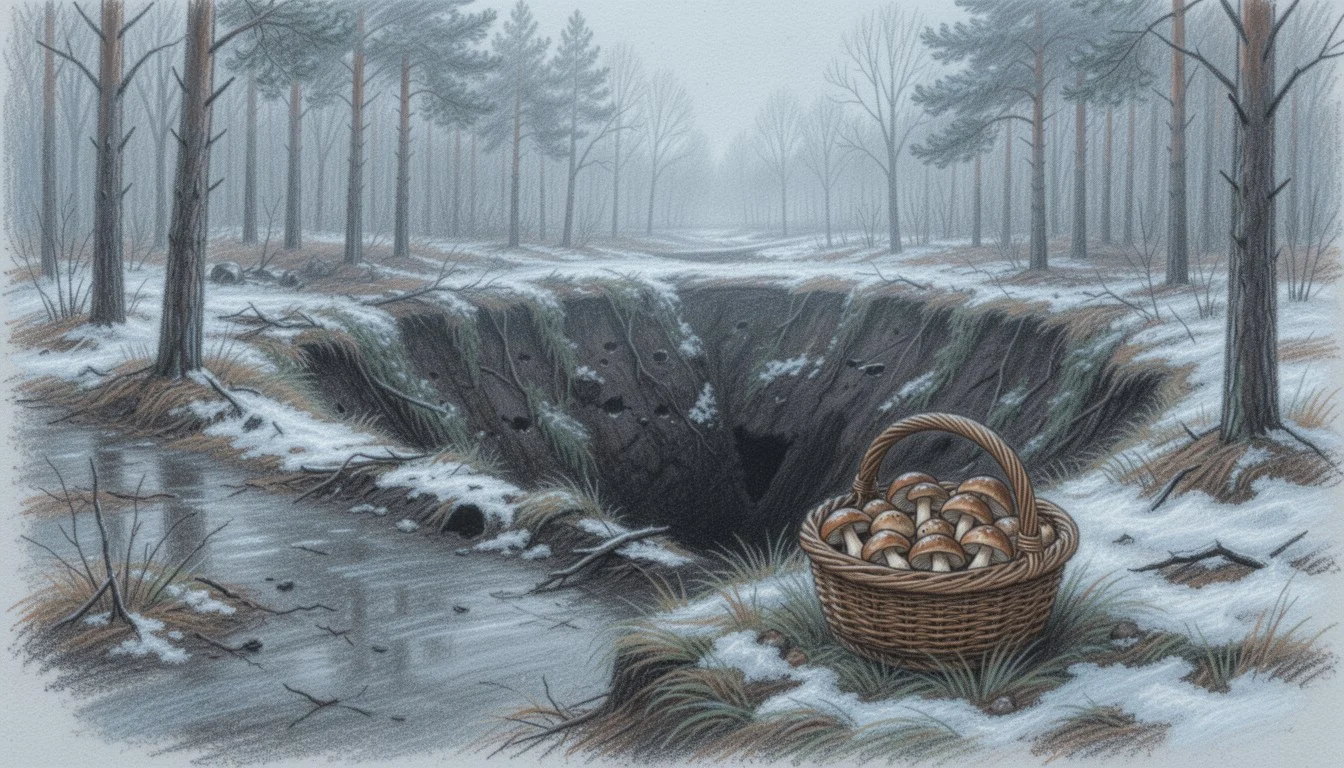
In October 2026, sanitary services in the Homel region checked 1647 samples of food and water and found excesses of the permissible level of caesium-137 in 19 districts. The story has dragged on since 1986: over 40 years, both the volume of checks and the list of foods in which radionuclides are found have changed.
Caesium-137 is dangerous because it enters the body with contaminated food and water and becomes a source of internal irradiation.
What is contaminated and where the norms came from
After the explosion at the Chernobyl nuclear power plant on 26 April 1986, radiation spread through the air over several thousand kilometres. Belarus suffered most: 23% of its territory, an area of 46.45 thousand km², was exposed to radioactive contamination, mainly in the Homel, Mahiliou and Brest regions.
Before the accident, the USSR operated under the NRB-76 norms. They contained no criteria for limiting exposure or for taking decisions on protecting liquidators, personnel and the population in emergency conditions. In 1991 the law "On the legal regime of territories exposed to radioactive contamination" was adopted: state programmes to overcome the consequences of the accident began with it.
According to official data, a third of a century later more than 13% of Belarus's territory remains contaminated.
2008 reports: milk, mushrooms, strontium
In the first half of 2008, radiation monitoring examined 38863 samples of food from the production sector and private farms, 1346 of them for strontium-90. No excesses of caesium-137 or strontium-90 were found in production-sector food. Milk contained no more than 37 Bq/l of caesium-137 against a permissible 100 Bq/l, and beef no more than 100 Bq/kg against a permissible 500 Bq/kg.
Milk that did not meet requirements for caesium-137 was found in 53 settlements of the Brest, Homel and Mahiliou regions: 13 in the Brest region, 39 in the Homel region, 1 in the Mahiliou region. A year earlier there had been 57 such settlements. There were no cases in the Minsk and Hrodna regions. Excesses of strontium-90 in milk from private farms were recorded in 20 settlements of the Brahin, Naroulia and Khoiniki districts.
The sanitary service named as causes of strontium-90 in milk feed exceeding the permissible level, grazing on natural pastures, wasteland and in forests, as well as weather conditions. The list of foods with excesses of caesium-137 included mushrooms, wild berries, fish, medicinal raw materials, vegetables and the meat of wild animals.
The share of mushroom samples with caesium-137 was 23.5% against 22.2% a year earlier, berries 15.6% against 13.1%, wild animal meat 33.3% against 39.2%.
From 2004 to 2008, more than 370 thousand dollars was invested in a project of the Swiss Agency for Development and Cooperation to introduce a radiation control system in the Brahin and Khoiniki districts. According to the agency's representative Volha Safranovich, the number of children in critical groups fell almost tenfold over the course of the project.
Disputes over what is more dangerous
At the conference "25 years after Chernobyl" in April 2011, Aliaksei Okeanov, professor at the International Sakharov Environmental University, named soil and food from private farms as the main sources of radiation contamination for the population. According to him, radionuclides went into the soil to a depth of 30–35 cm at most, and during farm work they rise and are carried across the country with dust. He called food control very strict.
In April 2012, Vital Rymasheuski said otherwise: the radioecological situation had worsened over the years, and the earlier underestimation of the consequences had led to the expansion of the soil contamination zone to practically the entire country. He claimed that about 80% of the dose people receive through food, and that the authorities had effectively dismantled what remained of radiation protection and deprived people of information about contamination. He cited data from Professor Ivan Nikitchanka: radionuclides had been found in every third resident of Minsk, and of 1.6 million hectares of contaminated farmland, more than 1.3 million hectares are in use, where 757 farms operate.
2024 data
According to official data of the sanitary service for January–June 2024, 9614 food samples were examined: 8486 for caesium-137 and 1128 for strontium-90. In the products of processing organisations, out of 5947 samples one excess of caesium-137 was found, in mushrooms in the Mahiliou region. In private farms 3667 samples were checked and 75 excesses of caesium-137 were found: in forest mushrooms (47), berries (14), wild animal meat (11) and other products (3) from the Homel and Mahiliou regions. No excesses of strontium-90 were found.
The Ministry of Health then drew attention to the inadmissibility of buying food and forest produce without documents outside designated places of trade, such as roadsides, near markets and shops.
Autumn 2026
In October 2026, 141 samples from the private sector with excesses were found in the Homel region; in one sample the norm was exceeded by more than 30 times. Against a norm of 300 Bq/kg of caesium-137 in mushrooms, levels ranged from 314 Bq/kg in the Naroulia district to 434 Bq/kg in the Kalinkavichy district. In berries from the Lieltchytsy district, 187 Bq/kg was found against a permissible 160.
For berries and preserves made from them, against a norm of 160 Bq/kg, the caesium-137 content ranged from 218 Bq/kg in the Karma district to 746 Bq/kg in the Brahin district.
What is said about the trend today
By April 2026, a downward trend in radionuclide content in food and a reduction of the contaminated area by almost half were noted. According to the sanitary service, the radiation situation has improved significantly, and contaminated land is gradually being returned to agricultural use: contamination density is falling because of natural decay and protective measures.
Radiation monitoring and dosimetric control of the population are provided for by the seventh state programme "Infrastructure of public safety" for 2026–2030.
Comments
To leave a comment, sign in with Telegram
Scan QR or open Telegram:
Open in TelegramWaiting for confirmation…