
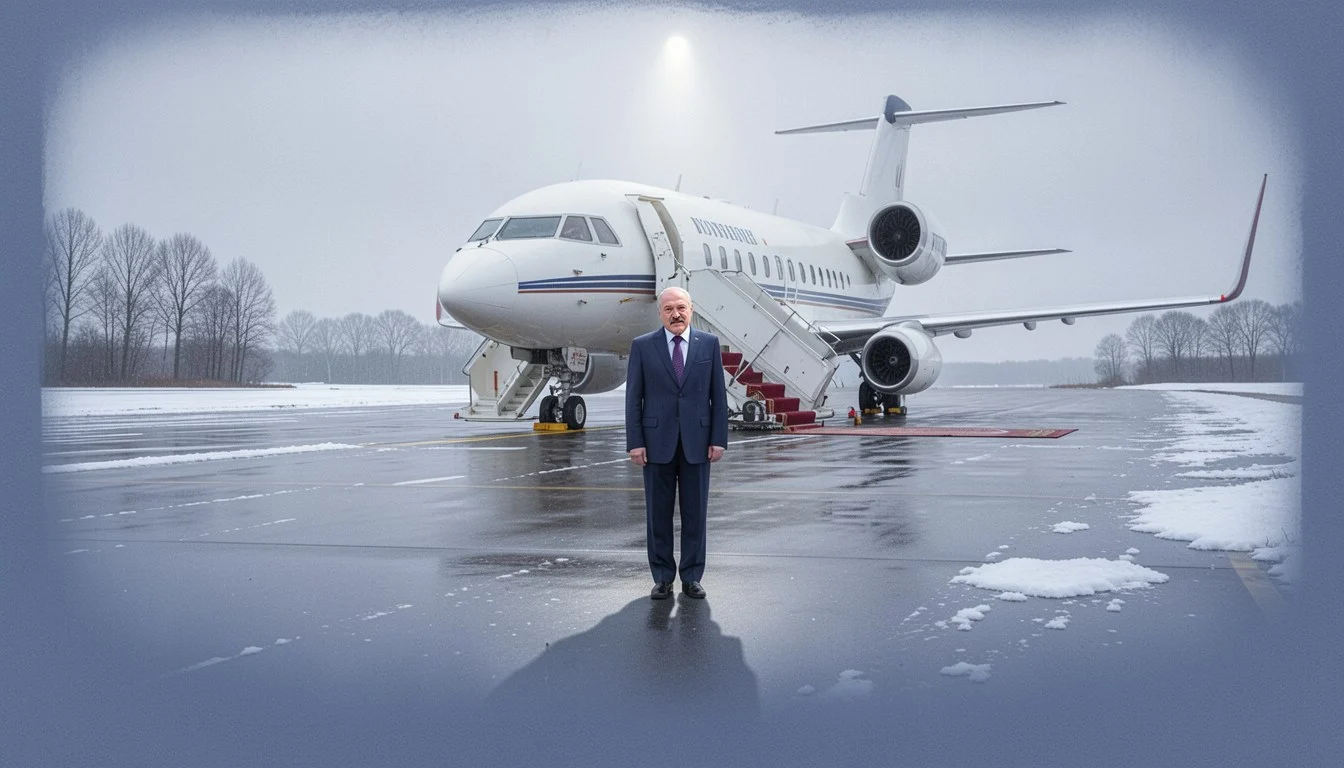
According to human rights defenders, as of 18 November 2026 there are 889 people in Belarus considered political prisoners, which is 0.00978% of the population. On the same day the human rights community recognised 12 more people as political prisoners. That is the result of the talks between Minsk and Washington that have been going on since late 2025.
In November 2025 the administration of Donald Trump began talks on the release of more than 100 political prisoners. On 11–12 December 2025 in Minsk, Aliaksandr Lukashenka met US envoys John Coale and Christopher Smith, after which 123 people were released. On 19 March 2026 another 250 were freed. At the seventh round, on 15–16 September 2026, 25 people were released.
According to Lukashenka, by March 2026 preparations were under way for concluding a "big agreement". The main economic outcome of the 2025 meetings was an adjustment of the sanctions lists: restrictions were lifted from the air carrier Belavia.
American general Keith Kellogg called the releases a "positive side effect".
The United Transitional Cabinet is headed by Sviatlana Tsikhanouskaya; she has said that 2026 may be decisive not only for Ukraine but also for Belarus, and that the international community must be ready for change.
ОШС, which is in opposition to Lukashenka, believes that he has turned into an object of relations between Russia and the US. According to ОШС, Washington used contacts with him to work on Russia, while Moscow used them for its own game with the US and the EU. In October 2025 ОШС warned that the political prisoners topic was only covering the main goal, which it names as Russia. ОШС itself blames independent media, opposition leaders, including Pavel Latushka and Sviatlana Tsikhanouskaya, and independent experts for society believing the opposite.
Lukashenka, ОШС claims, tried to sell his usefulness to both sides in exchange for guarantees of personal survival after the war in Ukraine and a place at future negotiations. But he did not dare to step out from under the Russian umbrella and offer Washington a real political turn, was too late and could not make use of what he received. In ОШС's assessment, the questions of legitimacy, free money and a seat at the negotiating table remain open, while dependence on Russia has grown. ОШС also claims that Lukashenka is seeking contacts with the EU but has no influence on his own political future, and forecasts that by spring he will become a "final political corpse". Belarus's freedom, in ОШС's view, will have to be defended by Belarusians themselves.
According to human rights defenders' counts, at the end of October 2026 more than 880 political prisoners were behind bars. On 29 October the human rights centre Viasna reported adding six people to the list: Tatsiana Koniukhova, Anton Makarau, Siarhei Bely, Pavel Hubenka, Siarhei Rybaliou and Viktar Fiodarau. After that the list stood at 890 people.
Since summer 2020, more than 4800 people have received official political prisoner status. The total number of people persecuted for political reasons without such status, by human rights defenders' estimate, may exceed 8800.
Comments
To leave a comment, sign in with Telegram
Scan QR or open Telegram:
Open in TelegramWaiting for confirmation…