
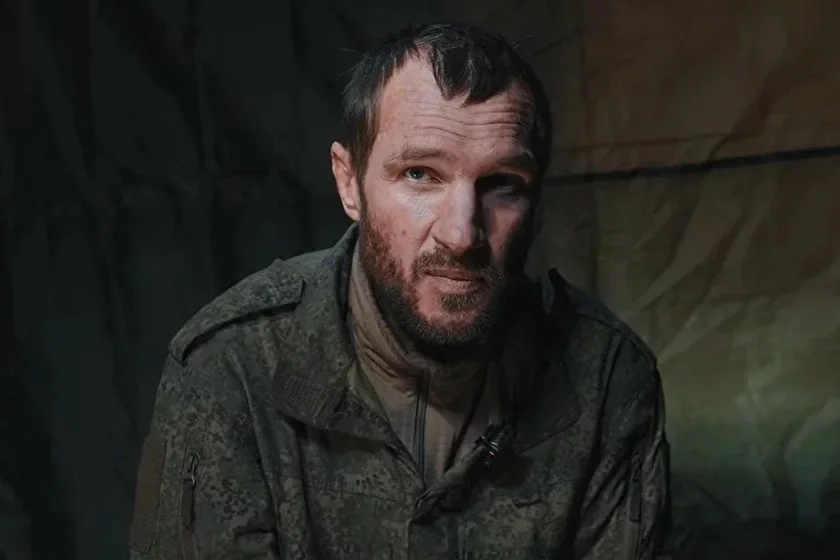
A Belarusian prisoner of war named Andrei described how he ended up in an assault group in an interview published by the 68th Separate Air Assault Brigade of the Ukrainian Armed Forces, named after Oleksa Dovbush. "They forced me, honestly, they forced me," he repeats several times.
Andrei is 37 and comes from Pinsk. At home he worked in road construction: he laid paving stones and kerbs, and built storm drains and drainage inlets.
Andrei admits he had run-ins with the law from a young age: hooliganism, two arrests for drunk driving, petty thefts. According to him, he spent about eight years in Belarusian penal colonies and was in prison during the 2020 protests.
The road to the war began in 2024, when an old acquaintance invited him to St Petersburg with the promise of "good work at Metrostroy". Instead of the expected 200000 Russian roubles for the first month, he was paid 30000, with the explanation that he had not met the plan. When he asked for an advance two weeks later, he was told: "If you don't like it, leave, there are plenty like you."
In 2025 trouble with the police began. They demanded registration and a SNILS (Russian insurance number), explaining that he was no longer a citizen of the "union state" but an ordinary foreigner. He was fined for not having his passport; when an acquaintance brought the document, the police kept the passport and promised to return it after the fine was paid. On his way to pay the fine, Andrei was stopped again and detained for walking around without a passport, which the police themselves had taken.
For several days he was held at the station without food or water. According to Andrei, the police opened the door, looked in and said: "You won't die." He says he was treated like a dog.
From the station he was taken to a migrant detention centre, where a woman asked whether he wanted to sign a contract for the "SVO" (Russia's term for its war in Ukraine). He refused, saying he wanted to live. The next day he was talked to at length: he was told about privileges, including the clearing of criminal records, and threatened with prison for stealing a scooter or a bicycle.
"I didn't believe in the money, because I had never seen any in Russia. But I did believe that they would clear my records and I would go home a clean man, without supervision," the Belarusian admits. He signed the contract, but never got his passport back.
The first training camp was in Kamenka, 60–70 kilometres from St Petersburg towards Vyborg, and lasted three weeks. AK-74 rifles were issued only after three days, shooting began after a week, and a week after that each man threw one or two grenades.
During physical training Andrei injured both knees. The X-ray machine at the hospital was not working, and soon they stopped taking him there. With his bad legs he was sent to Luhansk region; when he asked for treatment, he was told that if he could not walk on his own, he would be driven forward.
The second camp was in a forest near Bilovodsk in occupied Luhansk region. According to Andrei, the command said: "Drop your naive ideas that somebody will go to a construction site, somebody will stay on as a driver. You are all assault troopers. You are all meat."
The group he travelled with numbered 20–25 people: many from Karelia and northern Russia, there were Uzbeks and Tajiks, and he was the only one from Belarus. Several men tried to escape. A man of about fifty was brought back a day later; after that he was handcuffed to a post at night, and by day taken to the training ground under guard.
The commanders, in Andrei's account, warned directly: even if you refuse and end up in prison, you will still get to the front from there.
Comments
To leave a comment, sign in with Telegram
Scan QR or open Telegram:
Open in TelegramWaiting for confirmation…