
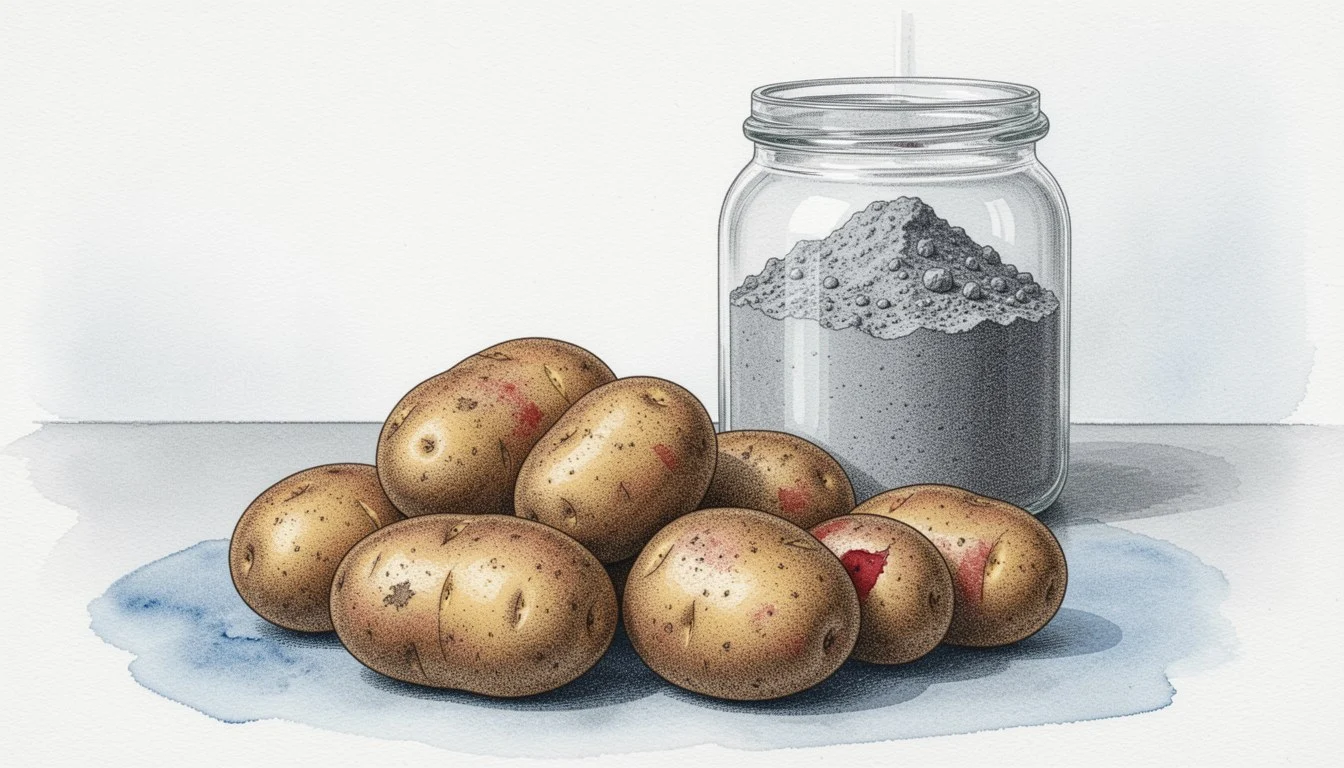
Scientists at Oregon State University, with NASA's support, have for the first time grown potatoes in simulated lunar soil. Testing showed the tubers are safe, contain no toxins and are as nutritious as ordinary potatoes.
The researchers recreated regolith based on samples from the Apollo missions and mixed it with vermicompost, an organic fertiliser produced with the help of earthworms. For the crop, about a third organic compost was added to the artificial soil, along with fertilisers containing nitrogen, phosphorus and potassium.
Without organic matter the result was poor: in "pure" 100% regolith shoots appeared but almost no tubers formed, and mostly weak foliage grew. More or less normal tubers set after vermicompost was added. The experiment used the Modoc variety, an early-ripening potato with red skin and white flesh.[1]
In March 2026 it was reported that laboratories growing potatoes had simulated lunar soil, temperature swings, low pressure and water shortage. In October 2026 researchers proposed watering potatoes with a solution containing 30% glycerol to retain moisture in the regolith.
The analysis found no statistically significant increase in the concentration of natural toxins, glycoalkaloids, in tubers from lunar soil: it did not exceed safe limits and did not differ from the figures for potatoes grown in ordinary soil. Botanist Aymeric Goyer said: "We found that potatoes can complete their whole life cycle in simulated lunar soil when organic matter is added." The results were published in the journal npj Microgravity.
Comments
To leave a comment, sign in with Telegram
Scan QR or open Telegram:
Open in TelegramWaiting for confirmation…